This is part three of a four-part article series. Read part two here: Beyond the frontier: Who gets left behind in Australia’s AI rush?
For much of the public conversation, artificial intelligence has been framed as a contest. Humans versus machines. Workers versus automation. Human creativity versus algorithmic production.
Whether this contest is framed in optimism or fear, the underlying assumption is largely the same: intelligence is a zero-sum game. As machine intelligence becomes more capable, human intelligence must become less important.
We think this frame is wrong.
The future is not human intelligence competing against artificial intelligence. It is co-intelligence: diverse forms of human intelligence working with machine intelligence to expand what people and communities can imagine, understand, and achieve together.
This changes the central question facing Australia.
Rather than asking only how intelligent machines will become, we should also ask: how intelligent, wise and capable could our society become because of them?
In the first two articles in this series, we argued that artificial intelligence should be understood as a new form of social infrastructure, and that access to this infrastructure alone is not enough. What matters is agency: whether people and communities can understand it, shape it, and use it for purposes they determine themselves.
Co-intelligence is what that agency looks like in practice.
From artificial intelligence to co-intelligence
At its simplest, co-intelligence can describe a person working alongside an AI system.
A writer uses AI to challenge an argument. A nurse uses it to make sense of complex information. A small business owner uses it to test a decision. A community organisation analyses hundreds of residents’ experiences to identify patterns that would otherwise remain hidden.
These interactions matter. But a co-intelligent society requires something more ambitious than millions of individuals becoming better at using digital assistants.
Individual augmentation may make people more productive. Collective co-intelligence should make communities more capable. That requires bringing together several different forms of intelligence.
Machine systems bring extraordinary capacities for processing, connecting, searching, translating and generating information. Humans bring judgement about what matters and what should happen next. Creativity opens possibilities that did not exist in the original problem. Lived experience and tacit knowledge reveal things that formal systems often miss. Culture carries meaning across people, place, and generations. Communities bring the relationships and collective processes through which people deliberate, disagree, decide, and act.
Co-intelligence is therefore not simply human intelligence plus artificial intelligence. It is the relationship between machine capability, diverse forms of human knowledge, and collective judgement, each capable of informing, challenging, and extending the others.
That distinction matters because our current AI conversation risks confusing access to vast amounts of information with intelligence itself.

Information is not the same as wisdom
AI systems have been built from extraordinary quantities of human-produced information. But information is not the whole of intelligence, and intelligence is not the whole of wisdom.
Some of the most valuable forms of human knowledge have never existed as neat datasets.
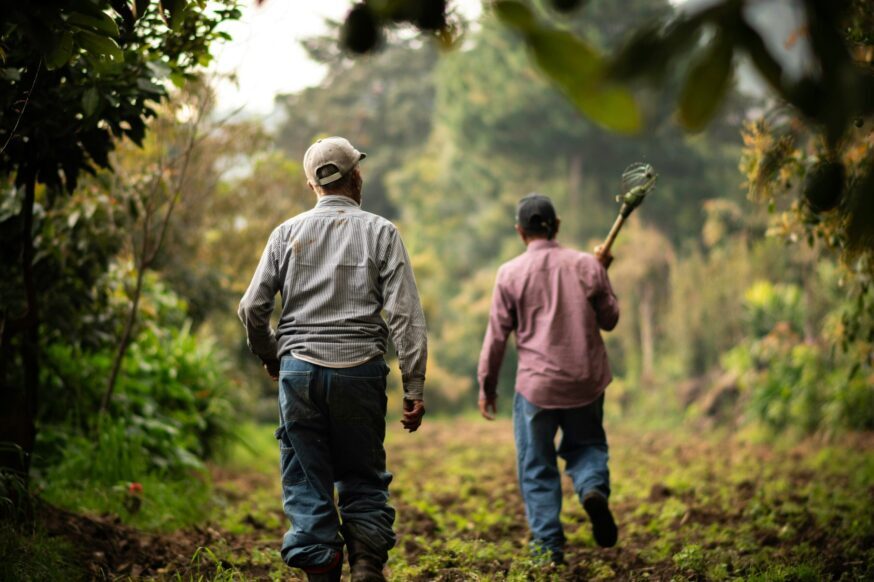
Think of a farmer reading subtle changes in a landscape. A craftsperson sensing when a material will hold or fail. A community worker noticing tensions before they appear in formal reporting. A teacher recognising potential that no assessment has captured. A family carrying memory across generations. An artist producing something nobody had previously thought to request.
Much of this knowledge is learned through practice, observation, relationship and experience. Some of it can be documented. Some loses meaning when separated from its context. Some may not be appropriate to digitise or share at all. This creates a fundamental challenge for AI.
Systems trained predominantly on what humanity has digitised can only ever encounter a partial representation of humanity. They may become remarkably capable while remaining culturally narrow: producing convincing answers while missing the context in which those answers will be used, or reproducing what has already been recorded while overlooking what is tacit, emerging, marginalised, or deliberately protected.
A co-intelligent society must value what machines can process without concluding that everything valuable must become machine-readable.
The risk is not only replacement, it is convergence.
The dominant anxiety about artificial intelligence is replacement: which jobs will disappear, which professions will shrink, and which human capabilities machines will outperform.
There is another risk that receives much less attention: Convergence.
Digital technology has repeatedly democratised sophisticated capabilities. Desktop publishing placed capabilities once reserved for professional publishers into people’s homes. Platforms such as Canva made competent visual design available to almost anyone. Generative AI now extends the same pattern across writing, coding, analysis, music, video and increasingly complex intellectual work.
This democratisation is extraordinary. But the very systems that lower barriers can also create new forms of sameness.
If millions of people use similar models, trained on overlapping bodies of digital information and optimised toward statistically plausible outputs, our work may become more polished while our thinking becomes less varied.
That would be a peculiar outcome: a society producing more content quickly, while slowly narrowing the range of ideas that give rise to it.
Human creativity matters precisely because it does not always begin with an objective.
It begins in curiosity, frustration, play, culture, emotion, dissent, imagination, and lived experience. Art does not always know its purpose before it exists. Communities create new practices because circumstances change. Young people invent forms of expression that previous generations could not have predicted.
Machine intelligence can help us explore an extraordinary landscape of possibilities. Humans must continue expanding the landscape.
Co-intelligence therefore requires more than access to computing models. It requires continually bringing new experience, culture, knowledge, disagreement, and imagination into our collective intelligence systems.

Indigenous knowledge and the limits of extraction
This distinction has particular significance in Australia.
First Nations knowledge systems challenge a deeply embedded assumption in modern technology: that valuable knowledge should be captured, structured, digitised, and made available for use. Indigenous knowledge is often relational and place-based, inseparable from Country, custodianship, responsibility, and the relationships through which that knowledge gains meaning.
The conventional technology response might be straightforward: if important knowledge is missing from an AI system, collect it, digitise it, and add it.
That is not necessarily inclusion. It can become another form of extraction.
A genuinely co-intelligent approach asks a different question: how can machine capabilities support knowledge holders on their own terms?
That means First Nations peoples retain authority over whether, where, and how their knowledge is used. Some knowledge may be shared. Some may be governed collectively. Some may remain local. Some should never enter an artificial intelligence system at all.
Knowledge sovereignty is therefore not an inconvenience to be engineered around. It is part of what makes an intelligence system legitimate.
And the principle extends beyond First Nations knowledge.
Families, professions, communities, cultural groups, and local institutions all hold forms of knowledge whose meaning depends on context. A future intelligence infrastructure should let knowledge holders determine how their knowledge participates in the system, rather than assuming that inclusion means surrendering it to a universal machine.
What does co-intelligence look like technically?
The encouraging part is that building more diverse intelligence systems does not necessarily require Australia to build a giant national foundation model that attempts to contain every form of Australian knowledge.
Increasingly, AI systems can be shaped around particular people, communities, and contexts.
A community organisation can connect an AI system to a locally governed knowledge base rather than relying solely on the model’s general training data. Organisations can encode important practices, principles and constraints into reusable instructions and skill files. Systems can be given controlled access to trusted local tools and information. Smaller models can be adapted or fine-tuned for particular domains, where appropriate. Communities can create their own evaluation questions to test whether systems understand local language, values, and context.
The technical architecture can increasingly allow intelligence to remain distributed. That matters.
The goal should not be one giant machine that knows everything about Australia. It should be an ecosystem in which communities can combine powerful general machine capabilities with knowledge and judgement they continue to govern.
This offers another way to think about AI sovereignty. Sovereignty does not have to mean isolation from international technology. It can mean having meaningful authority over the knowledge, rules, interfaces, and purposes through which that technology enters Australian life.
What would a co-intelligent society look like?
This brings us back to the central idea running through this series.
Access is not agency.
Agency emerges when people can use machine capability in service of purposes they have chosen, while retaining enough understanding and judgement to question its outputs and enough power to shape how it is used.
A co-intelligent society would be where citizens are participants in intelligence systems rather than merely users of them; where communities can build capability around locally defined purposes; where scientific knowledge, cultural knowledge, vocational expertise, creativity and lived experience can remain distinct while informing one another; where knowledge holders retain meaningful authority over what is shared; and where human judgement remains consequential when decisions affect people’s lives.
It would also protect creativity and dissent.
The purpose of intelligence infrastructure should be to expand the range of ideas available to society, not quietly pull everyone toward the same answer.
Government would become part of this co-intelligent system too. Public institutions could use machine capabilities to listen to communities at a far greater scale, identify patterns across thousands of experiences, and make policy more responsive, while still preserving context, accountability, and human relationships.
And we would evaluate success differently. Not only through productivity, model performance, or economic output, but through stronger communities, greater civic agency, more diverse knowledge, and an increased collective ability to tackle shared challenges.
Adoption asks: are people using the technology? Co-intelligence asks: are people gaining greater capacity to act?
An Australian path
Around the world, AI models are taking shape in different ways.
Australia’s approach to AI might not be to build the world’s largest model or the greatest concentration of data centres. It may be to show how a diverse democracy can combine powerful machine capability with local knowledge, human judgement, creativity, and living cultures.
That would mean asking: whose knowledge is present, whose is absent, who has power to shape these systems, and what should remain distinctly human, local, or protected? Above all, it means asking how machine capabilities can strengthen collective intelligence without flattening the very diversity upon which that intelligence depends.
The promise of co-intelligence is not simply smarter machines. It is not even smarter individuals. It is the possibility of a society that becomes more capable without becoming more uniform, more technologically powerful without becoming less human, and more intelligent without mistaking information for wisdom.
As we noted in our previous articles in this series, Universal Basic Intelligence lays the foundation. Co-intelligence is what we can build upon. The practical question is how.
In the final article of this series, we explore how governments, community organisations and trusted local institutions could begin building that capability from the ground up.