Why collaborative governance matters today
When a city floods, wildfires force mass evacuations, or a health system is overwhelmed by disease outbreaks, the question is rarely whether government should act, but whether it can realistically act alone. Public problems today are increasingly complex, cross-sectoral, and resistant to unilateral solutions. Traditional government institutions, although indispensable, often lack the flexibility, proximity, and full informational resources required to respond effectively.
Addressing such problems usually depends on forms of knowledge and capacity that lie outside the state: the situated understanding of communities held by civil society; the technological and operational capabilities developed within the private sector; and the analytical and normative insights produced by academia. Yet sustained collaboration among these actors remains the exception rather than the norm – and is often least present precisely where it is most urgently needed.
This gap between complex challenges and fragmented responses is particularly evident in the Global South. Limited state capacity, scarce public resources, continuous economic and political instability, and deep social divisions often mean that systemic change depends on collaboration – the ability of multiple and diverse actors to work together, share responsibility, and build responses anchored in collective intelligence.
In such contexts, democratic innovation rarely emerges from governments alone. It emerges when multiple and diverse actors who hold different pieces of the puzzle are brought into structured spaces where they can fully understand problems, align perspectives, build trust, and co-create solutions grounded in evidence.
But even when goals are shared, collaboration is difficult. Pressures to deliver fast results often leave little time for learning and reflection. Civil society struggles to find institutional channels for engagement and financial resources to implement its projects. Risk-taking is discouraged, so promising ideas often remain untested.
As a result, a persistent gap emerges between participation and impact: citizens engage and share demands, yet institutions struggle to translate those demands into policy. Moreover, communities generate crucial knowledge, yet this knowledge rarely shapes how problems are diagnosed or how policies are implemented.
Collaborative governance responds directly to these limitations. It creates intentional, structured spaces in which government and non-governmental actors exchange information and data, deliberate, coordinate, and co-create feasible solutions. It is not simply consultation or participation, but an iterative form of collective problem-solving that combines experiential knowledge and shared learning. It also provides mechanisms for experimentation, allowing actors to test interventions in practice and adapt them as they learn.
CPI’s Collective was developed precisely to address the absence of such spaces. Designed as a tool for collaborative governance, each cohort of the CPI’s Collective convenes key actors around a concrete public problem and guides them through a structured, multi-stage process – from scoping key actors and shared learning to co-creation, experimentation, and dissemination.
The model ensures that participation and deliberation lead not merely to proposals that will likely be cherry-picked by policymakers, but to innovative solutions to real-world problems that the institutions and organizations involved are capable of implementing and sustaining.
What CPI’s experiments in Latin America are teaching us
In Latin America, where institutional fragility, deep social inequality, and high mistrust shape democratic life, this approach is not only valuable but necessary. Against this backdrop, CPI launched the Innovation for Democracy in Latin America Collective in late 2024.
Before beginning this LATAM-based Collective, CPI met with more than fifty regional and global organizations working on democracy to understand who is driving innovation and what support they need. Building on this scoping work and on the learnings from previous cohorts, CPI convened a group of more than 15 organizations across seven countries, bringing together government agencies, civil society organizations, philanthropic entities, and academic institutions.
This included my own contribution through LATINNO, a database containing 3,744 democratic innovations across the region, which also informs my role in the Collective’s learning and knowledge-production process. Since its launch, this Collective has met every two to three weeks, creating a collaborative space where diverse actors can reflect on shared problems, exchange knowledge, and experiment with new forms of democratic practice tailored to the Latin American context.
CPI’s Innovation for Democracy in Latin America Collective was organized into three teams through a multi-step matching process: participants mapped the democratic ends they sought to advance (i.e., dimensions of democratic quality), the concrete public problems they aimed to address, and the means of citizen participation they planned to use (e.g., deliberation, digital engagement, etc.).
An affinity exercise then grouped participants into aligned teams. Each team was ultimately responsible for designing and testing a concrete experiment that addresses a specific public problem through citizen participation and seeks to strengthen at least one dimension of democratic quality by influencing the policy cycle. The three experiments below illustrate what this looks like in practice:
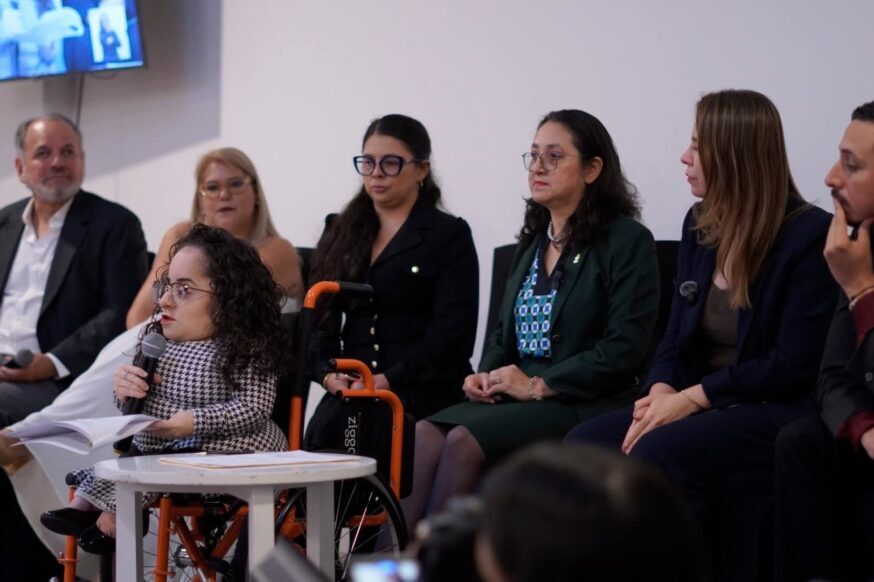
1. Strengthening Political Inclusion in Costa Rica: Inclusive Voices
2. Strengthening Accountability and Political Inclusion in Colombia: Voices that Count
3. Strengthening Responsiveness and Political Inclusion in Colombia:
Circles of Inspiration
Looking ahead
Taken together, these three experiments show what collaborative governance can look like when it is anchored in concrete problems and oriented towards strengthening specific dimensions of democratic quality.
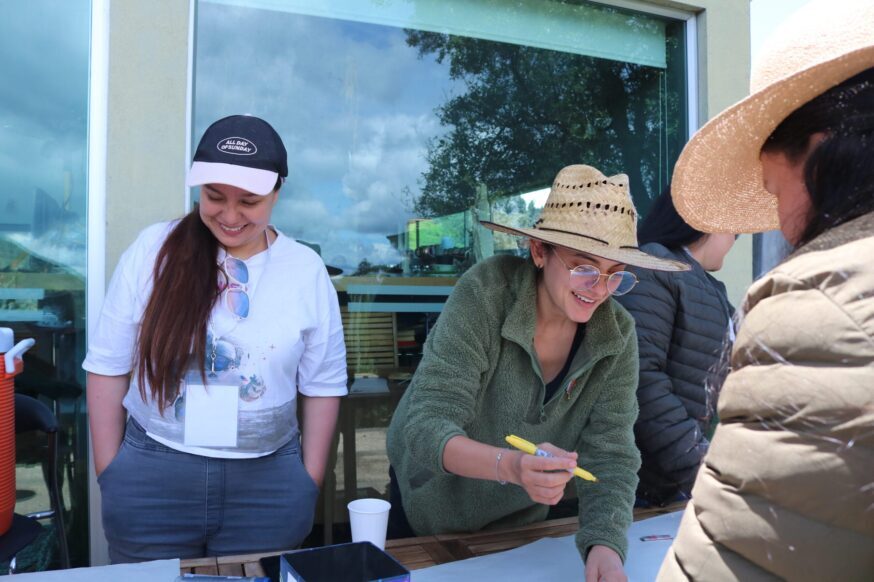
Each focuses on a different entry point – inclusion of people with disabilities in electoral debate, meaningful accountability for participants in national policy-making, and more responsive relationships between rural women and local governments – yet all three rely on the same core idea: that democratic innovation and resilience depends on bringing diverse actors into structured, sustained spaces where they can understand problems together, test solutions, and adapt as they learn.
Importantly, they are not meant to remain “pilot” activities: each experiment generates practical tools, collaborations, and lessons that can expand to other institutions, communities, and countries.
The experiments are, by design, modest in scale and limited in time. They will not, on their own, resolve the structural inequalities, institutional deficits, or deep mistrust that shape democracy in Latin America. But they can generate evidence about what works, what does not, and under which conditions collaborative governance can translate participation into responsiveness, accountability, and political inclusion.
CPI’s Collective is a way of making this kind of experimentation possible – and of ensuring that the lessons do not remain isolated in single projects, but circulate across countries and policy fields. As the Innovation for Democracy in Latin America Collective moves from design to implementation, the aim is not only to refine these three experiments but to build a broader repertoire of practices that others can adapt to their own contexts.
In that sense, CPI’s Collective journey matters more than any individual result: in the relationships built, the methods tested, and the shared understanding that democratic innovation is most effective when grounded in collaboration.
–
Thamy Pogrebinschi is a Senior Researcher at the WZB Berlin Social Science Center. She coordinated the LATINNO Project, which built the largest database on democratic innovations in Latin America. Her latest book is ‘Innovating Democracy? The Means and Ends of Citizen Participation in Latin America’ (Cambridge University Press, 2023). You can contact her here: thamy.pogrebinschi@wzb.eu