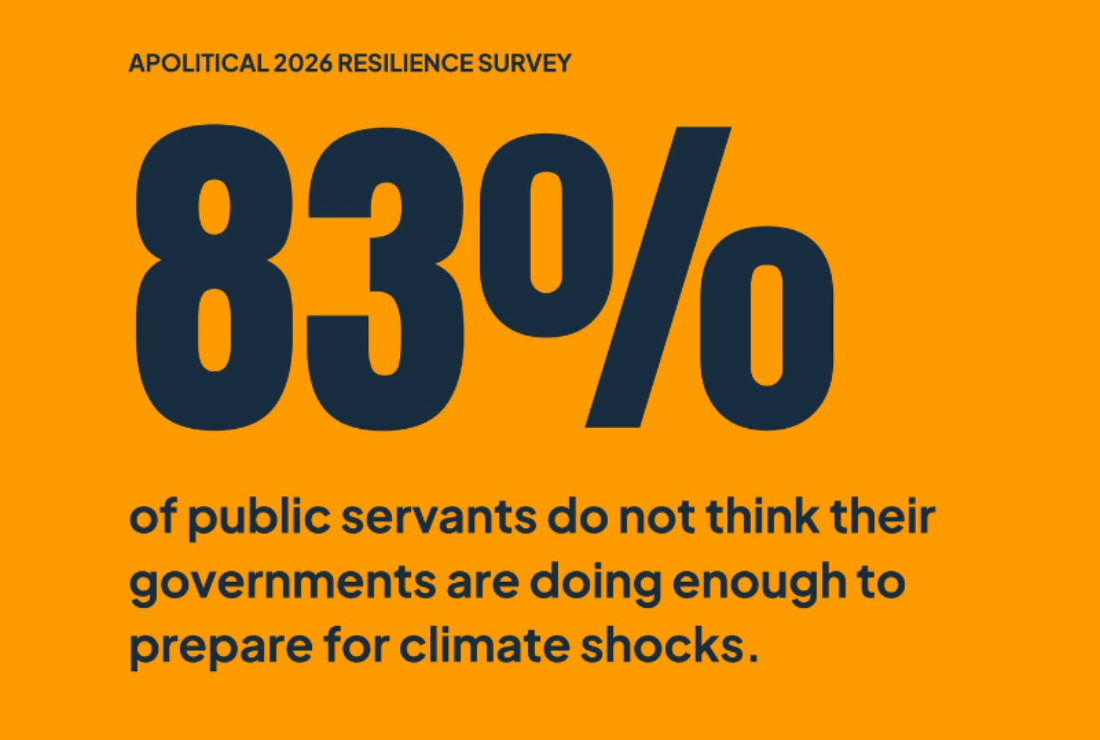
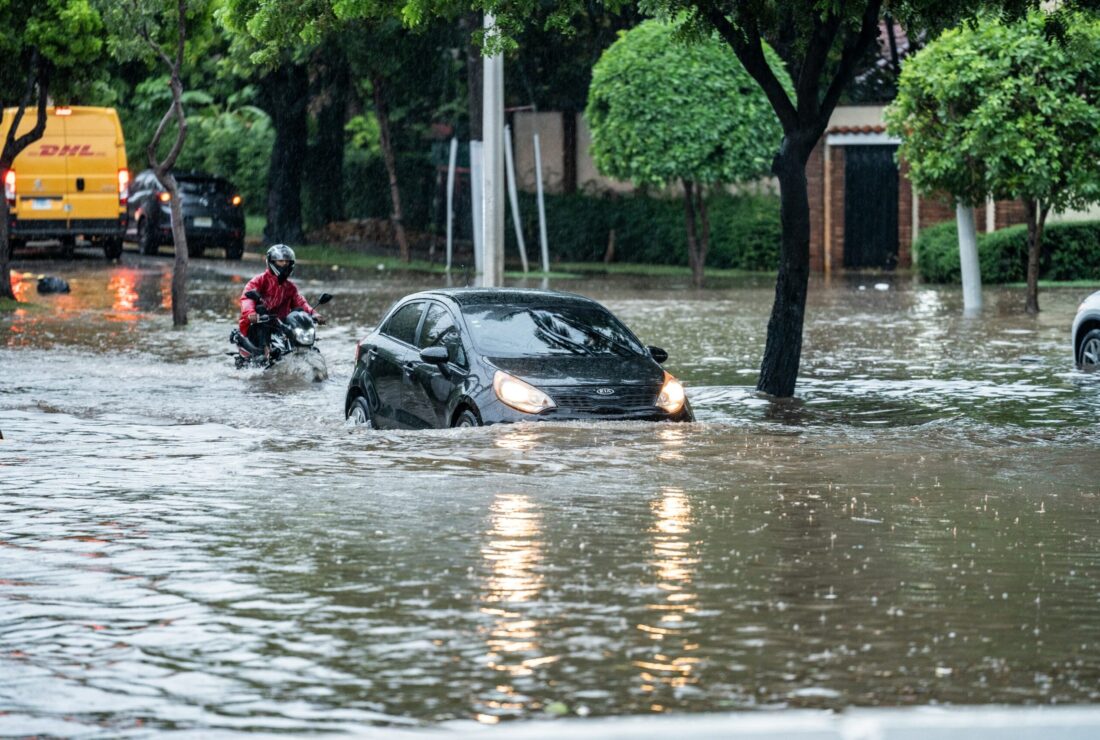
Insights from Apolitical’s 2026 Resilience Survey are stark: 83% of public servants do not think their governments are doing enough to prepare for climate shocks. These shocks will continue to increase in scale, in frequency, and in impact. So how do we close this gap in government preparedness?
Respondents cite four main barriers: competing priorities, insufficient budgets, poor coordination, and lack of political will.
In this era of polycrises, what if these aren’t four separate challenges? What if they are symptoms of the same underlying issue: governments are organised to tackle individual problems, when resilience demands a systemic response.
Climate resilience cuts across public health, housing, transport, economic development, emergency planning, to name a few. But governments often tackle these issues through separate departments, budgets and programmes. We expect institutions to prepare for interconnected shocks, while working with fragmented tools and structures. It’s time to start taking a systems view of systems challenges.
First, we need to connect resilience to the priorities governments already have. Climate resilience isn’t another item on an already crowded agenda. Cleaner air, cooler homes, affordable energy, reliable food supplies, and social cohesion all help communities prepare for and withstand shocks. They also improve health, reduce living costs, and support local economies. Making these connections tangible can help governments move beyond competing priorities towards shared goals.
Second, we need to rethink how resilience is funded. If we approach resilience department by department, we will struggle to fund it at the scale required. Systemic investing offers a different approach, looking beyond individual projects to understand how investments can create benefits across an entire system. This means connecting departmental budgets, taking longer-term perspectives and bringing together public, private and philanthropic capital.
Third, we need to coordinate before a crisis hits. Climate shocks do not respect departmental or administrative boundaries. Preparing for them requires people to work across departments, sectors and jurisdictions from the outset. That means investing in the relationships, capabilities and ways of working that make collective action possible, rather than relying on emergency coordination mechanisms when it is already too late.
Finally, the need for resilience should resonate across the political spectrum because keeping residents safe, stabilising economies, protecting livelihoods and ensuring communities can function through disruption are fundamentally at the core of what governments are responsible for. Governments need to show how preparing for (and mitigating) climate shocks delivers tangible benefits for the people they serve.
These changes in perspective and approach do not just need better plans or new technical solutions. They require governments to work differently: connecting priorities, pooling resources, building relationships and turning ambition into implementation.
Apolitical leads the world in public servant training, and the new Government Resilience Campus is focused on building the skills, networks, and tools public servants need to manage these compounding climate shocks. For over a decade, the Centre for Public Impact (CPI) has worked with governments to tackle complex challenges. Together, we want to explore what it takes to make systemic climate resilience possible in practice.
In the coming months, we will investigate where governments need the most support, why existing approaches fall short, and what capabilities, structures, partnerships and financing approaches could help them act differently. Our aim is to translate these insights into practical guidance, strengthen learning across the public sector and identify opportunities to invest in the programmes needed to turn systemic ambition into action at scale.
Sign up here if you would like to get involved in building government resilience.