Voices that Count: An Accountability Service that Listens and Returns Value addresses a structural political problem in Colombia: while citizens contribute extensively to public policy processes, they receive little feedback on how their participation influences the outcomes.
Participatory mechanisms often operate as one-way channels where reports are delivered, but the concrete link between citizen input and policy decisions remains opaque. This is not only due to a lack of institutional will, but also to the practical difficulty of processing large volumes of unstructured information and communicating impact in accessible and verifiable ways. The result is a persistent gap between participation and impact, which erodes accountability and weakens political inclusion, especially for communities historically excluded from policy decision spaces.
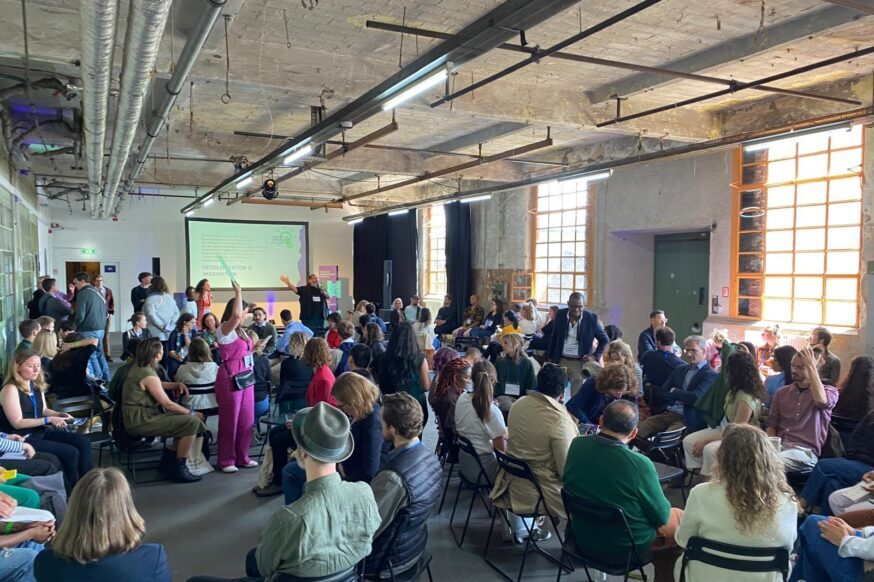
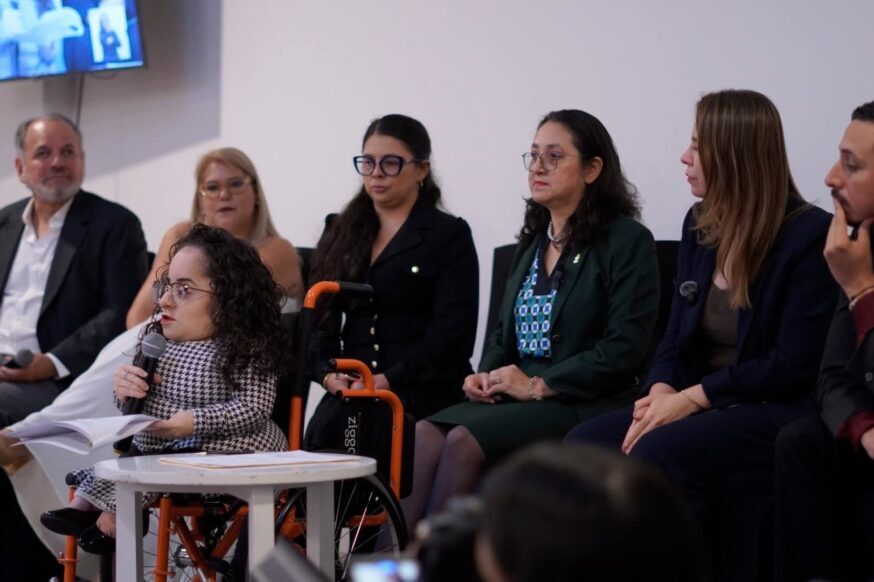
The experiment tests whether an AI-supported tool can help close this gap by accelerating the analysis of citizen proposals and enabling clearer, more meaningful accountability. It is embedded in the ongoing national process to formulate Colombia’s public policy on the Human Right to Food, led by the National Planning Department (DNP). Within this broader process, the experiment introduces two deliberative accountability sessions – one in Popayán and one in El Carmen de Bolívar – where citizens evaluate both the substantive results of the AI analysis and the degree to which the session strengthens their trust in the participatory process.
The participants include victims of the armed conflict, LGBTIQ+ and non-binary individuals, Black, Afro-descendant, Raizal and Palenquero (NARP) populations, campesino and Indigenous communities living in rural and urban settings. Their diversity is a core condition for evaluating whether improved accountability can enhance political inclusion for marginalized groups.
In each session, participants engage in two forms of deliberation. First, they provide feedback on the technological tool itself – its accuracy, its ability to reflect the substance of their contributions, and its usefulness as a mechanism of transparency. Second, they assess whether receiving a clear explanation of the impact of their input changes their perception of institutional responsiveness. This includes evaluating whether they feel heard, whether they would participate again, and whether the accountability process meets their expectations of democratic participation and policy impact.
The experiment thus examines whether improvements in the quality of reporting can generate improvements in trust – a hypothesis that lies at the center of the democratic problem the team seeks to address. By comparing citizens who attend the accountability sessions with a control group that receives no accountability, the experiment will assess whether the tool improves satisfaction, trust, and perceptions of institutional legitimacy.
The participating organizations contribute distinct and complementary capacities. Extituto de Política Abierta (Colombia) coordinates the experiment with the DNP, engages communities, and leads the design of the accountability methodology. Instituto Update and Democracia+ (Brazil) prepares bias-sensitive training inputs for the AI model, supports the design of inclusive participatory spaces, and co-develops the measurement instruments. Red de Innovación Local (Colombia) leads the construction of the technological prototype, ensuring alignment with Colombian legal and methodological standards for participation. Together, they form a collaborative team capable of testing both the technical and democratic value of AI-enabled accountability.
If successful, the experiment offers a pathway for institutionalizing more transparent and inclusive accountability processes in Colombia. It could become a public good that agencies at multiple territorial levels can adopt to improve how they process and communicate citizen input. The methodology and architecture can be adapted for other contexts by retraining the model with local policy and legal frameworks. By transforming accountability from a unidirectional report into a cycle of listening, analysis, and return, the experiment strengthens democratic quality through enhanced accountability and deeper political inclusion.