The Inclusive Voices Digital Platform for People with Disabilities addresses a persistent democratic deficit in Costa Rica: despite a robust normative framework guaranteeing the political rights of persons with disabilities, women, and young people with disabilities remain largely absent from public deliberation and electoral debate. Their voices are not heard, and the policies that affect them are often formulated without their perspectives. Significant barriers prevent their effective participation, producing an implementation gap between legal recognition and political reality. The result is a form of underrepresentation that weakens democratic quality, particularly political inclusion and responsiveness, in a country where more than 17 percent of adults live with some form of disability.
The experiment seeks to democratize political debate by testing whether digital channels can meaningfully expand participation for historically excluded groups. It combines a high-stakes, in-person deliberative event – held in the context of Costa Rica’s 2026 presidential election – with a large-scale livestream followed by the production of digital content, and a digital platform for participation and consultation.
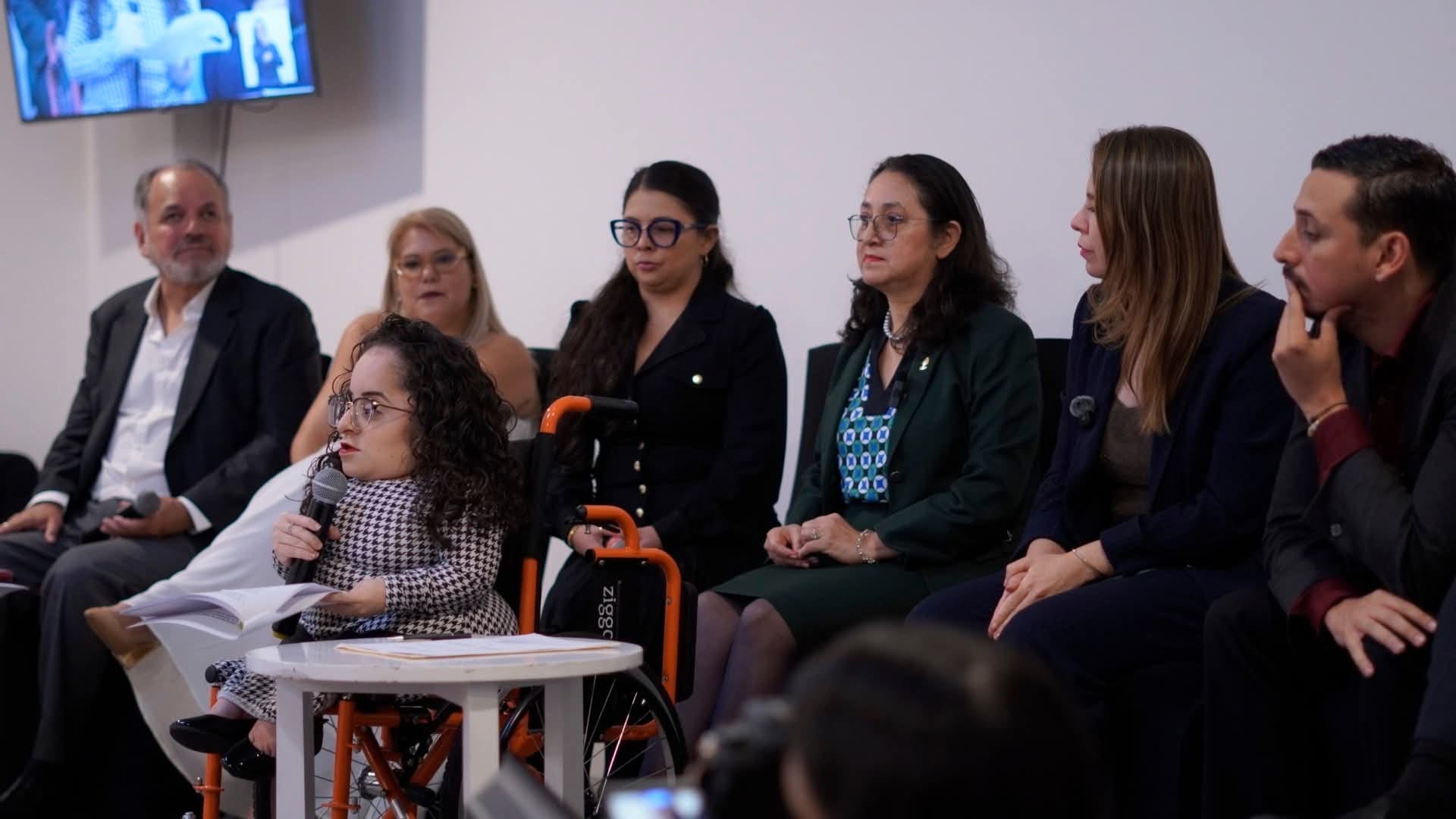
At the in-person event, candidates responded to questions about their disability inclusion proposals, while invited participants, primarily women and youth with disabilities, discussed the gaps in policy proposals. In practice, this enabled the demands of persons with disabilities to be expressed directly, evidencing their capacity for political organization and articulation. This design enabled real agenda-setting influence and may perhaps, in the future, contribute to improving the implementation and evaluation of policies for people with disabilities. The simultaneous livestream on platforms such as YouTube and Facebook created a second layer of participation, enabling a wider public to engage and intervene through moderated channels. This hybrid format broadened access while generating a public, verifiable record of the exchange. The resulting engagement suggests that participation was active: the event reached 797 total views, generating 410 interactions, including 58 reactions and 131 comments. A third layer is about to be added through the production and dissemination of secondary content – short videos, interviews, podcasts – that reframes and deepens the discussion, extending its reach well beyond the event itself.
Finally, in early February, the platform Inclusive Voices will be launched to enable consultation and debate, connecting citizens to the (newly elected) government. Together, these layers of participation allow the experiment to test whether digital media and platforms can be repurposed as spaces for political inclusion of minority groups.
The four participating organizations contribute complementary strengths: +CostaRica (Costa Rica) anchors the initiative through its networks and experience working with disability communities, while Democracia en Red (Argentina), Politize! (Brazil), and Smart (Colombia), contribute expertise in digital participation, platform design, and content strategy.
This experiment demonstrates that accessible, intentionally designed hybrid spaces can broaden who counts as part of the political community and whose voice enters the public sphere. It also offers a sustainable platform and a methodology that can be replicated across the region—contributing, in concrete terms, to a deeper and more inclusive democratic life.