CPI’s Collective: Innovation for Democracy in Latin America
After an 18-month journey of co-design, experimentation, and shared learning, CPI’s Collective: Innovation for Democracy in Latin America has come to a close. What emerged were three experiments on democratic innovation, and a set of lessons for anyone working to strengthen democracy, drive systems change, and create the conditions for deeper collaboration.
CPI’s Collective is a structured problem-solving and experimentation infrastructure designed as a tool for collaborative governance. It brings together government and non-government actors around a shared public problem, creating spaces to exchange ideas, deliberate, co-design, and test new approaches in practice.
This cohort convened more than 15 organisations from six Latin American countries to launch democratic innovations addressing persistent public problems in the region.
Latin America is both a region where young democracies are still grappling with significant gaps between participation and impact, and one with a long history of democratic innovations, as evidenced by the LATINNO project. This combination of persistent challenges and continuous innovation made it an ideal context to explore collaborative approaches to democratic governance.
CPI’s facilitation and experimentation infrastructure design allowed participants to build relationships, develop shared purpose, and form cross-regional experimentation teams based on affinity and complementary strengths. Together, they identified the democratic ends they wanted to strengthen, the public problems they aimed to address, and the means of citizen participation they would focus on. The results were three distinct experiments that have now been tested in the region.
Strengthening political inclusion in Costa Rica: Inclusive Voices / Voces Inclusivas
Partners: +CostaRica (Costa Rica), Democracia en Red (Argentina), Politize! (Brazil)
The Inclusive Voices experiment set out to address a long-standing problem: people with disabilities in Costa Rica had been largely excluded from political debates and policy agendas.
The team tested ways of strengthening political inclusion through a combination of in-person and digital deliberation. First, they participated in and livestreamed a debate where candidates in Costa Rica’s presidential elections presented proposals and engaged directly with people with disabilities. Then, the team facilitated a second livestream, led by representatives of Costa Rica’s Movement for People with Disabilities, to discuss and respond to candidates’ positions. Lastly, they launched an online deliberation platform where citizens could share views on policies proposed by the incoming government.
While the livestreams successfully engaged the community, moving participation online proved more difficult. Participants were unfamiliar with the tool, and shifting political dynamics (including cuts to carer subsidies) changed the community’s immediate priorities. In response, the team relied on the relationships and trust they had built with movement leaders to encourage participation, leading to stronger engagement over time.
The experiment enabled people with disabilities to engage directly with politicians during a presidential race, helping ensure their concerns were explicitly reflected in political debates for the first time in years. It also demonstrated how accessible digital tools, such as livestreaming platforms, can create meaningful opportunities for democratic deliberation and participation.
Strengthening responsiveness and political inclusion in Colombia: Circles of Inspiration / Vecinas Valiosas
Partners: Socialab (Colombia), Huella Local (Chile), Laboratorio de Gobierno (Chile), Red de Innovación Local (Argentina), VelezReyes+ (Latin America)
Circles of Inspiration focused on the lack of political participation spaces available to rural women in Colombia, and the limited attention their needs often receive in policymaking.
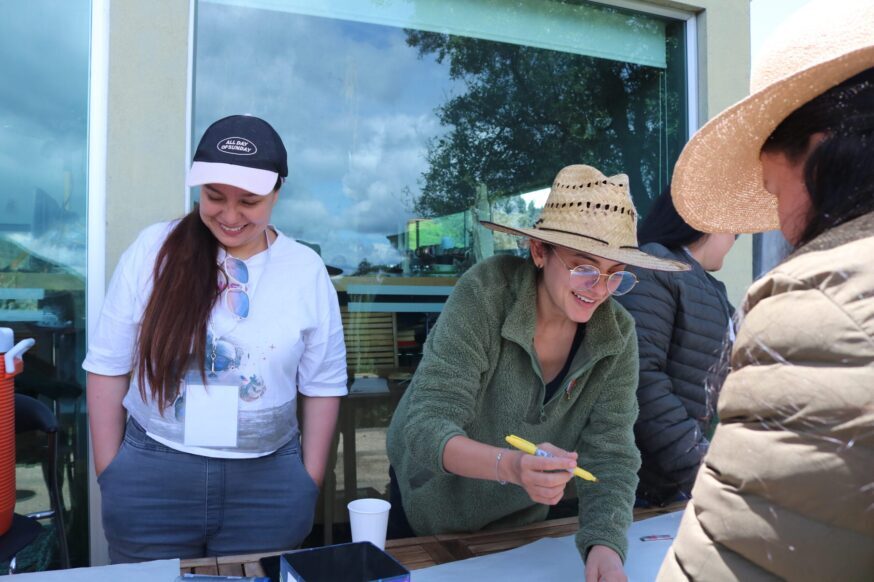
The experiment was built on ‘Vecinas Valiosas’, an existing project in Colombia that brought rural women together for mutual support. Rather than starting from scratch, the team strengthened and adapted the existing model to bring female community leaders and local government officials in Cundinamarca to engage in collective learning, trust-building, and collaboration around public problems affecting women’s lives.
Building on an established initiative came with challenges. Adapting the existing model required careful listening, support, and iteration. In the end, the team found this approach allowed them to reach more communities and move faster than a completely new initiative.
The experiment took the form of an eight-week learning journey that supported women in identifying shared challenges, developing proposals, and engaging directly with local government officials. For many, it was the first time they had entered spaces where they could meaningfully shape conversations about policy and public services.
The groups also became important sources of peer support. As discussions unfolded, participants recognised how interconnected their challenges were, and how closely their ability to respond to them was linked to their own wellbeing.
One of the clearest lessons from the experiment was that political exclusion is often mistaken for disinterest. In reality, women were highly motivated to engage in public decision-making when given the opportunity, support, and infrastructure to do so.
By creating structured spaces for collaboration and building trust between communities and public officials, the experiment strengthened local government responsiveness and enabled rural women to play a more active role in shaping solutions to the issues affecting their lives.
Strengthening accountability and political inclusion in Colombia: Voices that Count / Voces que Cuentan
Partners: Extituto de Política Abierta (Colombia), Instituto Update (Brazil), Democracia+ (Brazil), Red de Innovación Local (Colombia)
Voices that Count explored a persistent challenge in participatory policymaking: even when governments consult citizens, how can people know whether their contributions actually shaped the final policy?
The experiment aimed to close the feedback loop by using AI to analyse how citizen input was reflected in policy documents and then sharing those findings back with participating communities.
Initially, the team planned to test this approach with Colombia’s upcoming Food Security Policy. However, when timelines no longer aligned, they adapted the experiment and partnered with a Colombian lawmaker to analyse an existing Rural Reform Law instead.
The findings showed that citizen contributions had been meaningfully incorporated into legislation in this case. But the team’s broader insight was that this kind of mechanism could help strengthen accountability in future policies, including Colombia’s upcoming Food Security Policy.
While citizen participation itself is not new, the experiment demonstrated how AI can support more rigorous analysis of participation processes and help governments communicate transparently about how public input influences decisions. Importantly, this created a two-way process: citizens contributed to policy design, and governments could report back on the outcome of that participation.
The experiment validated a mechanism that rethinks participatory processes. Unlike other accountability efforts focused on the results of specific government interventions, this mechanism increases accountability regarding citizen participation. This encouraged citizens to take a more active role in participating in policy design spaces. It also led to direct participation by young people, who began replicating these conversations in their communities. The team hopes the methodology can be adapted and adopted by more governments in the future.
Three lessons from the experiments
Relationships, trust, and collaboration are the foundation of effective experimentation
All three experiments faced challenges. What enabled them to adapt and continue was the trust built between communities, public officials, and experimentation teams themselves.
This was evident in the support received from the Movement for People with Disabilities in Costa Rica, the trust built among rural women in Cundinamarca, and the partnerships formed with public officials interested in improving accountability and participation.
Experimentation teams also demonstrated the value of cross-regional collaboration, with many organisations working together for the first time and learning from one another throughout the process.
Adaptability matters more than speed when working in complexity
Experiments rarely unfold as planned. Across all three experiments, teams encountered changing political contexts, timing challenges, and unexpected barriers.
This uncovered crucial learnings, such as how everyday digital tools can be leveraged for significant impact, or the practicalities of keeping attention focused on a political issue long enough to address it effectively. These led to adaptations which in turn resulted in stronger outcomes than originally anticipated, from deeper citizen engagement to wider territorial reach.
The experiments reinforced that, in complex systems, responsiveness and learning are often more valuable than rigid execution.
Participation requires infrastructure to enable political inclusion
Across all three experiments, the challenge was not a lack of public interest in participation. It was a lack of enabling infrastructure, relationships, and spaces needed for people to participate meaningfully.
Whether it was people with disabilities in Costa Rica struggling to be heard, rural women in Colombia historically excluded from policy agendas, or citizens contributing to policy without visibility into outcomes, exclusion was often structural rather than individual.
An underlying power asymmetry tends to result in political exclusion. By creating structured spaces for deliberation, accountability, and collaboration between citizens and decision-makers, the experiments helped shift these dynamics and strengthen political inclusion.