This is the second blog in a series covering the activities of the TransCap Initiative and the Centre for Public Impact on piloting a systemic approach to urban climate finance with Dublin City Council. Find out more about the origins of this work in our first blog post, “Piloting Systemic Finance for City Climate Action”.
Like so many local governments, Dublin City Council is tasked with delivering on multiple high-stakes challenges – more homes, lower emissions, as fast as possible – within a system it does not fully control. Our deep dive into funding for adaptive reuse in Dublin revealed that capital is only one constraint, and power, incentives, and institutional design are at least as, if not more important. In a highly centralised governance model, even the largest local authority cannot mobilise sufficient resources to finance transformation without reshaping the systems around it. This project uncovered a hard truth: systemic funding for climate-positive housing is less about inventing new instruments, and more about rewiring the conditions that make action possible.
Against a cityscape of glass office blocks and centuries-old Georgian terraces, we set out to discover: What is the nature of the funding challenge? And which interventions could catalyse more funding and faster progress towards Dublin’s circular housing goals?
We learned that
- Structural conditions like centralisation and control of public funding strongly limit Dublin’s ability to access the types and amounts of funding needed to address complex, interconnected issues like climate action, social housing provision and dereliction.
- Money problems are people problems: working together across departments and creating meaningful relationships with other owners and managers of financial capital in Dublin and Ireland takes time and energy. Incentives for people across the ecosystem to take on risk, innovate and share power need to be realigned, and there’s a clear need to create more opportunities for different actors to come together to align and deliver on shared objectives.
- The basic enabling conditions must be established first before money can start flowing. This means clear ownership of the problem, held by a dedicated and sufficiently-resourced team, and a clear, stable vision. That vision needs to be backed by a strong coalition within DCC, across the city of Dublin and Ireland as a whole.
If you want to know more about how we got there, read on.
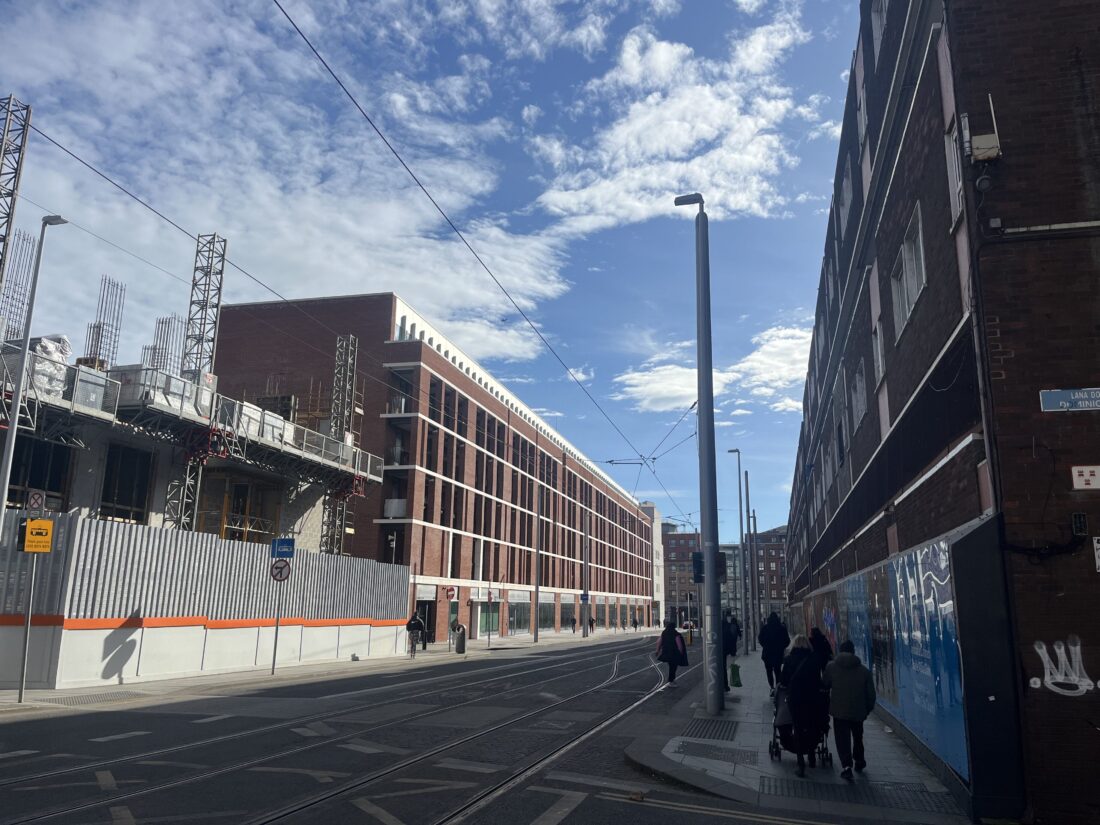
In February 2025, we began piloting a systemic approach to urban climate finance in partnership with Dublin City Council (DCC). Our goal was to understand how different types of funding can be used effectively to support circular practices in Dublin’s built environment, as part of its broader climate and housing ambitions.
What emerged from the initial systems analysis phase is a fairly common picture for many local governments: siloed responsibilities, inconsistent data, a lack of relational infrastructure, rigid funding structures – an interplay of factors that cement the status quo and hinder meaningful progress towards cities’ housing and climate goals. And crucially, there is no single policy, initiative or innovation to untie this knot. What’s needed is a systemic approach.
So we explored different pathways to advance circularity in the built environment and after weighing factors like viability, carbon reduction potential, and co-benefits, we decided, together with our partners at DCC, to focus our efforts on advancing adaptive reuse of vacant and derelict buildings.
The potential is enormous. DCC is committed to creating 40,000 new homes between 2022 and 2028, and we’ve estimated that adaptive reuse could contribute around 8,900 housing units. Not to mention the co-benefits of addressing residential dereliction as a means of urban regeneration: lived-in streets and areas are safer and more attractive, commute times and emissions are reduced, regenerated vacant-above-the-shop-units (VATSUs) can drive economic activity and vitality, and DCC taking the lead can signal to owners of nearby private properties to follow suit. All of these are reasons why addressing dereliction is a priority issue for both Dublin City Council and the Irish Government.
In the second phase, we built on our initial findings and recommendations and zeroed in on the issue of funding. How big a barrier is funding in all of this? What is the nature of the funding challenge? And which interventions could catalyse more funding and faster progress towards Dublin’s circular housing goals?
Part 1: What we did
We continued our research with an in-depth investigation to better understand the funding challenge faced by DCC. Two questions were at the heart of this:
- How big is the funding gap that needs to be filled?
- How does financial capital currently flow into Dublin’s housing system for adaptive reuse?
This would allow us to draw important conclusions around funding needs and potential intervention points.
To ascertain the funding gap, we heavily drew on existing research by DCC’s Adaptive Reuse Unit and other relevant studies. The goal of this exercise was not to arrive at an exact number, but to gain a directional understanding of the potential of adaptive reuse in Dublin and the financial resources required to realise it. Under-utilised commercial properties and VATSUs offer significant potential for adaptive reuse. At the same time, the renovation costs associated with realising this potential are significant, and we estimated a total funding gap ranging from EUR 2.1 billion to 2.9 billion.
To put this figure into perspective, DCC’s capital programme for 2025 to 2027 foresees expenditure of EUR 2.2 billion on housing and building, the bulk of which is dedicated to new builds and renovation works. So it became clear that the adaptive reuse funding gap is too significant to be addressed by DCC alone and through its existing landscape of funding instruments.
This led us into the second part of our funding landscape analysis: How does public money flow through the system, how much is available for adaptive reuse, and what are the conditions that shape whether and how money flows and who receives it? Over a few weeks of extensive desk research and a handful of helpful conversations with stakeholders from within DCC, national government and the third sector, we collated information on funding programs, amounts, and administrative procedures. We integrated all this information by mapping out stocks, flows, sources and recipients into a single graphical artefact, which we call a Value Flow Diagram.
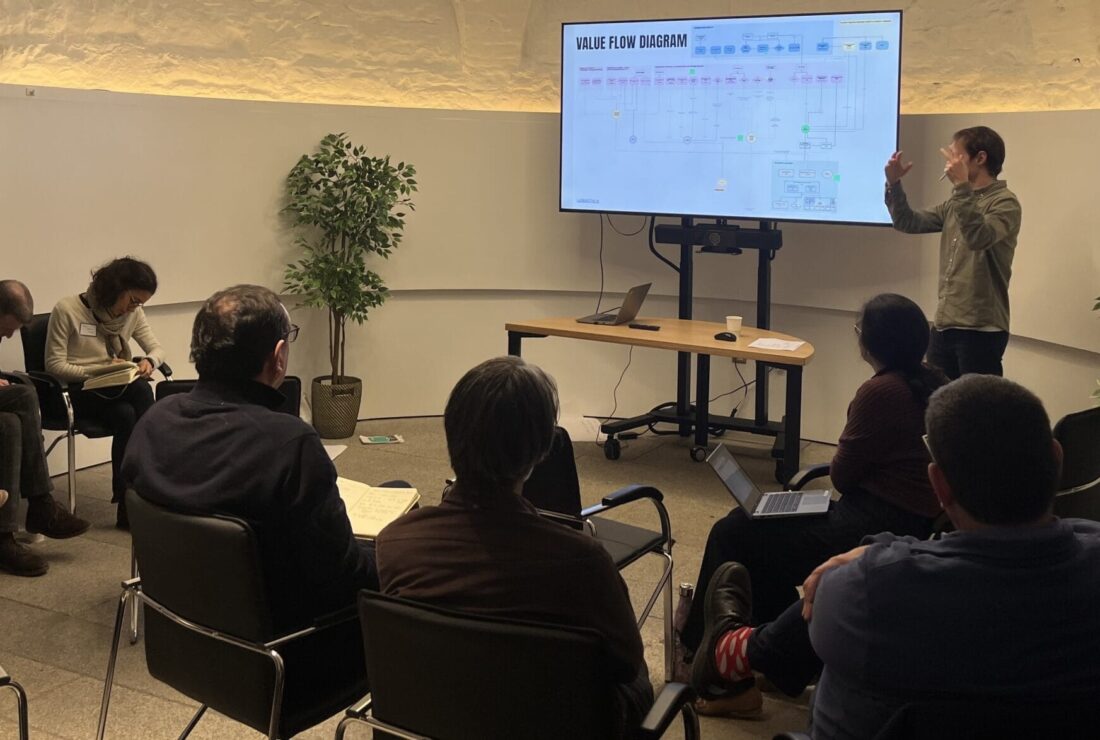
The Value Flow Diagram shows:
- where public funding comes from, i.e. the programs and entities that administer it;
- how much funding is available in the various programs as a whole and per funding application;
- in what form the funding is disseminated, i.e. as grants, loans, guarantees or the like;
- whether the funding is available through a competitive process or is predictably accessible;
- and which actor groups (are eligible to) receive funding.
This analytical inquiry yielded a range of useful insights:
- DCC is heavily reliant on national government funding.
- The funding landscape is complicated and fragmented, with sources from across different national departments and programs.
- The majority of funding instruments disperse money in the form of grants, and only a small number are set up to provide loans or guarantees.
- Most of the available funding serves very specific purposes – be it adaptive reuse for community development, heritage preservation, or energy improvements – and in many cases, it is unclear to what extent these programs complement each other.
We tested our learnings from both the funding gap analysis and the value flow diagram with our partners at DCC and other stakeholders in the housing and climate ecosystem, and used them to explore which interventions could release more financial capital for adaptive reuse. To our delight, we found that this artefact proved useful and instructive to our partners at Dublin City Council and has also been used by other stakeholders, including members of the Vacant to Vibrant Building Alliance.
Part 2: Opportunities for impact
There are two key structural limitations that make it so difficult for DCC to access more money for its ambitions on adaptive reuse – or any other complex challenge that requires significant amounts of funding:
- Together, local authorities in Ireland can only borrow an aggregated maximum of EUR 118 million, a cap set by the Department of Housing, Local Government and Heritage.
- Local authorities directly control only a small range of sources to generate income, most notably commercial rates, planning levies, and social housing rents; the scope for increasing any of these is very limited due to the complex relationship between local and national government.
These challenges mean DCC largely depends on central government funding for adaptive reuse. Therefore, we developed recommendations to help DCC leverage the existing funding landscape more effectively and catalyse adaptive reuse activities in Dublin.
Addressing immediate needs:
1. Problem Ownership
Responsibilities over climate and housing are currently siloed across departments, with no multi-stakeholder plan for how to tackle the complex challenges of vacancy and dereliction, and a general lack of problem ownership. We recommend setting up a dedicated multidisciplinary team with a remit to advance adaptive reuse. Its activities should initially focus on delivering adaptive reuse projects with DCC’s own buildings, providing technical assistance to individual owners and small-scale developers, collecting and sharing learnings from different actors, and managing grants and funding.
2. Housing Activation Fund
To finance these adaptive reuse projects, we recommend setting up a dedicated fund from public grants, managed by this new team. The purpose of this fund would be to flexibly complement existing schemes and address the structural gaps that currently prevent funding from flowing. This could include topping up existing schemes to better align with Dublin’s economic realities, or providing bridge funding to mitigate cash flow issues arising from delayed payouts of other grants. This fund would both amplify the impact of existing funding schemes and give DCC greater agency in addressing vacancy and dereliction.
Growing emerging possibilities
Over the medium term, we suggest following the recommendations of the Vacant to Vibrant Building Alliance and engaging with Ireland’s national government to activate other levers that can create better enabling conditions for adaptive reuse. These include introducing tax incentives and redesigning existing tax schemes. We also recommend exploring the setup of a blended investment fund with a mandate to provide flexible financing across the full lifecycle of adaptive reuse projects.
Enabling long term change
Finally, to meaningfully increase the amount of financial capital available for adaptive reuse over the long term, we recommend exploring targeted changes to the rules limiting Irish local authorities from borrowing and raising financial capital. This would open up a variety of innovative financial mechanisms that are being tested in other jurisdictions and cities, and could also be applied in Dublin: local climate bonds, property-linked finance, or social outcome partnerships.
Part 3: What we’re learning
The last few months of deep investigation into the nature of the funding challenge for adaptive reuse in Dublin surfaced a host of valuable learnings, some of which are summarised here:
- Structural conditions: the Irish context, with its pronounced centralisation, strongly limits the agency of local authorities – even big and powerful ones like DCC – to effectively tackle complex issues like housing and climate. DCC has ambitious goals to mitigate climate change and solve the housing crisis while improving quality of life for residents, but structural conditions strongly limit its ability to access the types and amounts of funding needed to address the issue.
- Money problems are people problems: Accessing sufficient funds is only part of the problem. Siloed organisational structures and rigid ways of working make it very difficult to tackle cross-cutting issues like adaptive reuse, which require people to work together across departments and create meaningful relationships with other owners and managers of financial capital in Dublin and Ireland. Incentives for people across the ecosystem to take on risk, innovate and share power need to be realigned. We’ve encountered widespread desire among different actors to work together, we need to create more opportunities to do so.
- Enabling conditions: No amount of mapping funding flows, convening multi-stakeholder groups or designing innovative funding schemes will be enough to help Dublin tackle its climate and housing challenges on its own. The basic enabling conditions must be established first. This means clear ownership of the systemic problem – of creating low-carbon homes, in a housing crisis, and supporting thriving communities – held by a dedicated and sufficiently-resourced team, and a clear, stable vision. That vision needs to be backed by a strong coalition within DCC, across the city of Dublin and Ireland as a whole.
What’s next
The work with Dublin City Council over the last 12 months offered us a treasure trove of insights and learnings. Most importantly, it validated our starting hypothesis that a more systemic approach to urban climate finance is crucial for cities to take effective action on climate change. It also sparked bigger questions about how we approach this work and what needs to change next. We’ll be diving into these in our final blog, where we zoom out to explore the wider ecosystem and what it will take to shift it. Stay tuned!
If you are curious about learning more and exploring how this approach could work in other cities, get in touch. And if you have your own thoughts and learnings around systemic urban climate finance, we are equally eager to hear from you and build this field together.
About the TransCap Initiative (TCI)
TCI is a non-profit open innovation initiative working to develop, test and scale systemic investing. We do this through research and conceptual development, prototyping and field building. We’re powered by a diverse, international, and ambitious community, and collaborate with wealth owners, institutional investors, foundations, financial intermediaries, researchers, public-sector bodies, and other innovators. Learn more on our website.