Resilient Governments are Effective Governments
Local governments are on the front lines of climate change. They manage critical services—transit, sanitation, public safety, infrastructure—that were designed with an accepted set of environmental factors in mind. But that stability is gone. Across the U.S., cities are contending with more frequent and severe disruptions to their operations, staff, and service delivery due to extreme weather.
The financial cost is enormous, and increasing significantly over time. In the 1980s, there were on average three “billion-dollar” weather and climate-related disasters per year. In 2024, there were 27 for a total cost of approximately $183 billion (Smith, 2025). Five such events have been recorded in the first half of 2026 (Smith, 2026). These impacts hit cities and counties especially hard: they divert budgets, degrade infrastructure, and overwhelm systems that were never built for this level of stress. Moreover, as local governments struggle to maintain operations in the face of a changing climate, they risk losing the trust and confidence of their residents.
Despite growing awareness, most local governments lack the tools and frameworks to adapt their day-to-day operations to a changing climate. While many cities now have access to sophisticated climate modeling, these tools are highly underutilized and, when they are used, their insights rarely translate into tangible, department-level action. The result is a persistent gap between awareness and implementation—one that leaves essential city services and, more importantly, communities increasingly vulnerable to climate hazards.
How can local governments bridge this gap?
Over the course of six months, the City of Austin (COA) and the Centre for Public Impact (CPI) partnered to understand the City’s core barriers to operationalizing climate resilience, and co-design and test a scalable framework. The framework would enable city staff to articulate how varying climate scenarios could affect key operations and determine the operational improvements and investments needed to build greater resilience.
The report provides a brief overview of our engagement with COA and open-source access to the guidebook that we drafted. We hope this can be useful to any institution across the public, private, and social sectors that is looking to build greater operational resilience to climate and environmental hazards in order to reduce service disruptions, increase efficiency, and save costs.
Program Overview
The City of Austin (COA) has long been a leader in the climate action and resilience space. Through their partnership with the UT Co-Lab, the City put forth a set of Citywide climate projections. Publications like the Climate Equity Plan, the community-led One Austin Framework, and the Resilient Austin Playbook create clear Citywide directives for resilience. Various departments have integrated strategic foresight and clear feedback loops into their operations.
In 2024, COA established a government-wide commitment through the Open Government Partnership (OGP) to “create a future-focused process for adapting City operations to climate changes.” The core objective was to create a scalable framework whereby any City department and/or operation could map their processes in detail, understand how different climate scenarios could affect them, and determine the types of operational changes needed for each scenario and when to make them. To help fulfill this commitment, COA partnered with the Centre for Public Impact (CPI) with the ultimate goal to co-design and pilot a baseline approach for integrating climate scenarios into routine operational and budgetary planning. This section provides a summary of the program.
Objectives
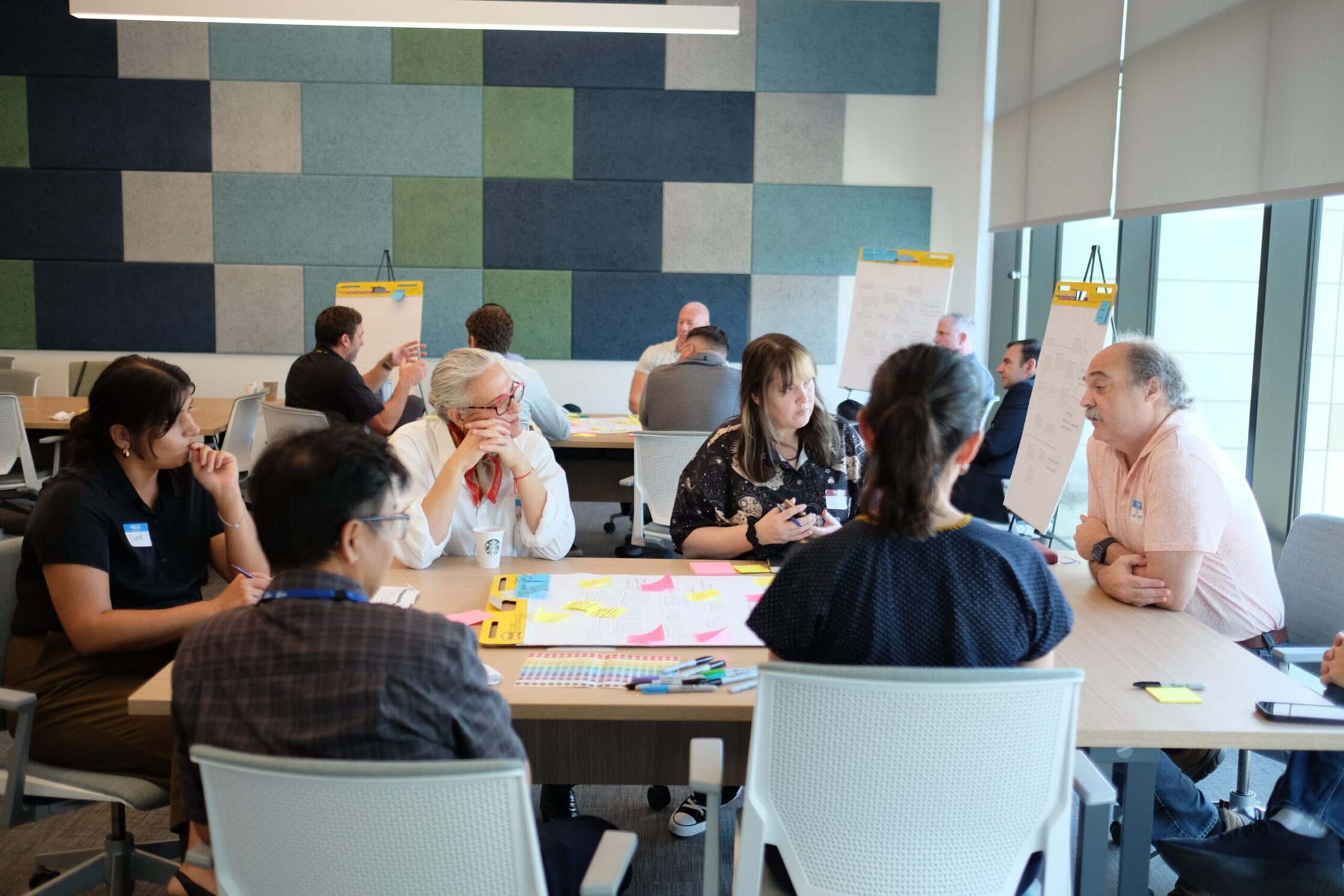
- Understand the resources and barriers to operationalizing climate resilience at the City of Austin.
- Design a co-created and validated approach that enables City staff to apply climate projections to budgeting, operations, staffing, and policy decisions.
- Strengthen collaboration across departments, laying the groundwork for ongoing joint action on climate resilience.
- Build staff capabilities around systems thinking, futuring, scenario planning, and climate resilience through hands-on testing and learning.
- Synthesize and share learnings from the climate adaptation process with other Austin departments, peer cities and other key stakeholders.
Impact
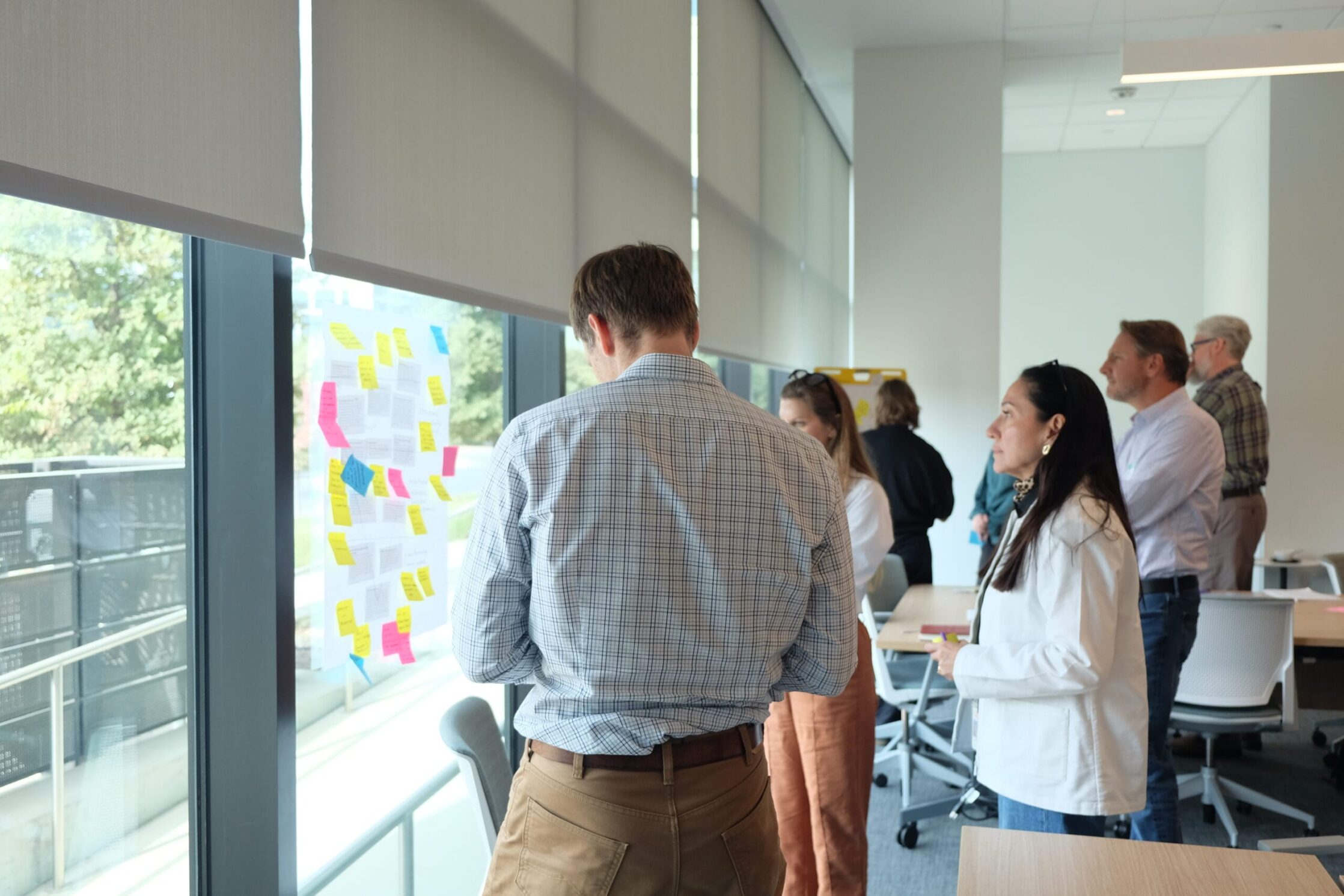
The City of Austin, in partnership with CPI, made significant strides towards operationalizing resilience across its departments over six months. Results from the program included:
- A deep understanding of systemic barriers preventing Austin from advancing / building climate resilience.
- A research-backed and robust multi-module guidebook on how to make operations more climate resilient.
- A short- and long-term strategy to accelerate climate resilience across the city– informed by six months of research– that embeds resilience considerations into core performance management systems. At the City of Austin, this begins with quarterly Results ATX performance reviews and multi-year departmental planning guidance—to help leadership anticipate climate-related risks and opportunities, adapt strategy, and sustain progress toward Citywide Strategic Plan goals.
Departmental Strategies
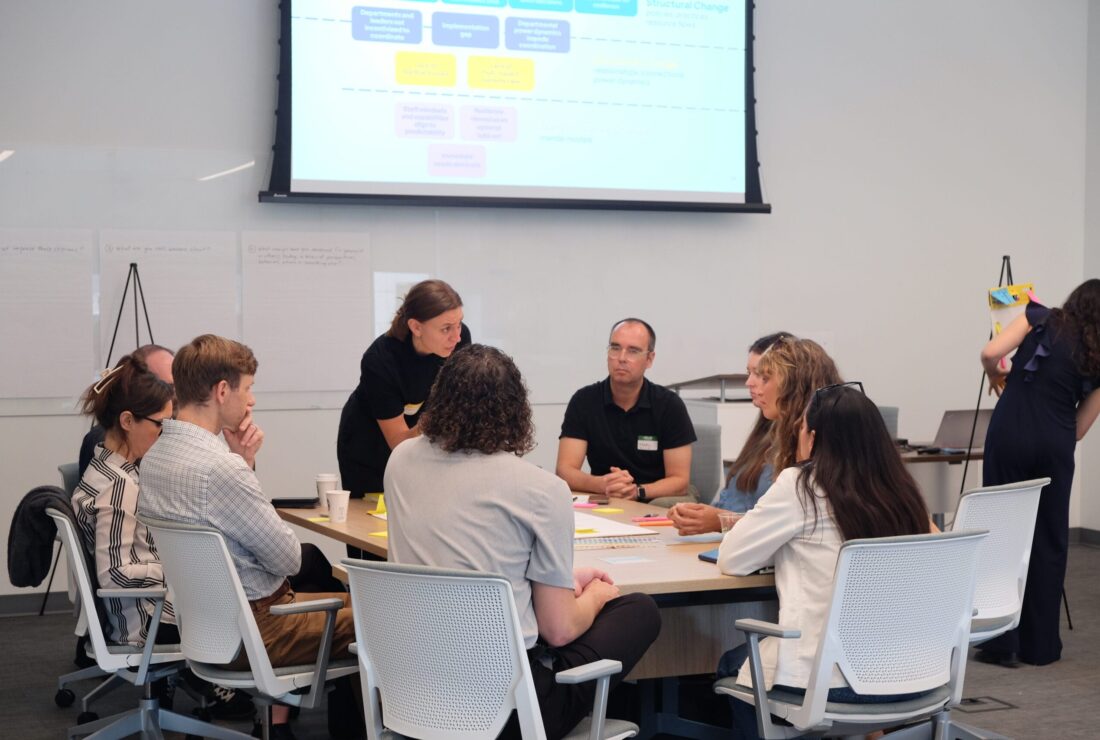
Below are the types of operational resilience measures participating departments developed over a 7-week period while piloting the first version of the guidebook:
- Aligned forecasting approaches and incorporated climate-informed scenarios into long-term planning and risk management.
- Established more structured onboarding, coordination and cross-team collaboration mechanisms ahead of and during climate events.
- Shifted infrastructure prioritization from fixed inspection cycles to a risk-based approach using condition and climate data.
- Integrated climate and population data into demand forecasting, with clearer governance and update processes.
- Implemented a more reliable emergency response staffing model with formal training and structured coverage.
Key Takeaways
The guidebook we co-created, while a useful anchor for change, is not a silver-bullet solution for building resilience. Below, we share our reflections from working with the City of Austin as a series of conditions that, when paired with certainty artifacts like processes, policies, and standards, can support more resilient operational approaches.
1. Exploring an organization’s barriers to resilience
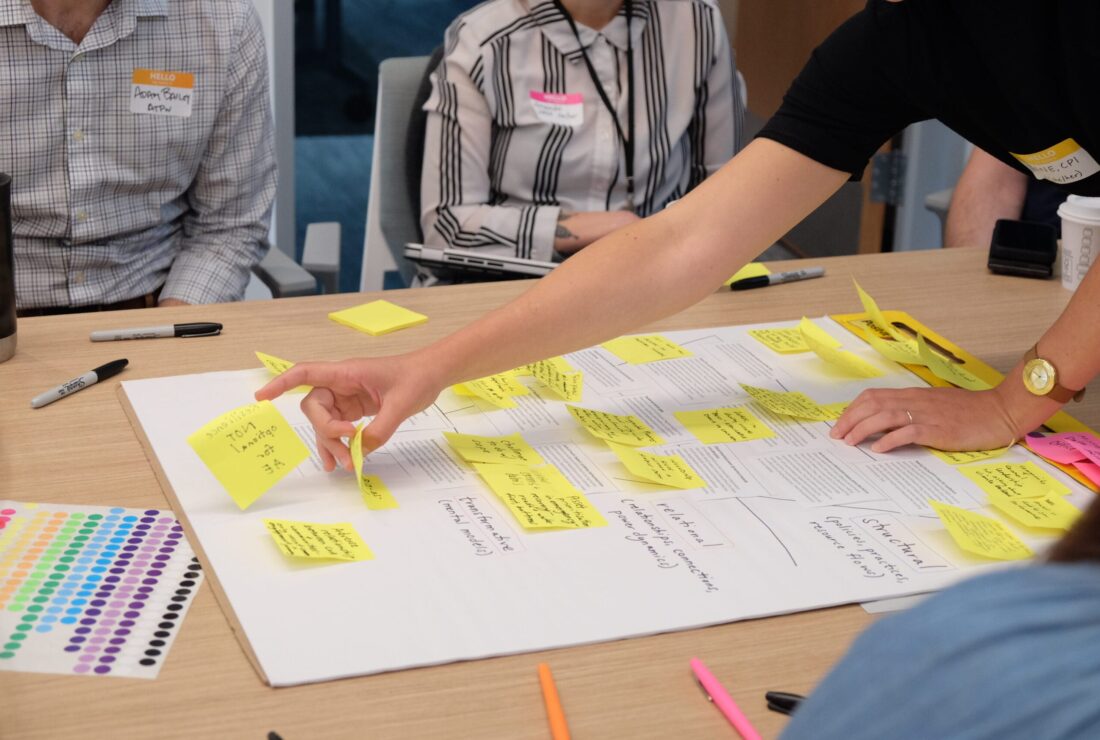
To advocate for a new way of working, it can help to have a visual that encapsulates government-wide barriers to resilience. Frameworks like the Water of Systems Change or the Integral/AQAL model to map themes gathered from interviews with staff from across departments and operating roles can help capture these learnings for future discussion.
2. Leveraging data and technology to better monitor risks and estimate costs
To make the case for different resilience measures, it is important to have the necessary operational performance, risk modeling, and budget records easily accessible. Centralizing available data from across departments, and making investments into data collection to fill major data gaps, can facilitate more proactive, cost effective investments.
3. Building leadership buy-in
To ensure that funding, staff, and other resource allocations help build resilience, senior leadership is key. It is critical that practitioners make the case to leaders early on the value of resilience, documenting and communicating regularly about improvements to service delivery and cost effectiveness that emerge from resilience-building measures.
4. Aligning incentives and performance with resilience by setting a government-wide resilience goal
To ensure that incentives align with building resilience as an organization, leaders should set clear, organization-wide resilience goals that can strengthen mandates for resilience. Convening staff from several departments, and community members from across the City, to co-create a realistic but motivating goal, can help ensure that the goal is meaningful to those responsible for implementation.
5. Placing community and frontline experience at the core of change
Ultimately, vulnerabilities are best observed and understood – for all their weaknesses – by community members who face greatest exposure to societal risks. Staff who serve these community members, or otherwise most closely understand how operations happen on the ground by way of their role and position, are some of the most insightful advisors for change. Local governments should build the feedback loops with staff and community members to understand – and respond – to those whose experiences are most impacted by present and future operational risks.
6. Crowding in external capital
Many local governments experience existing and mounting budgetary pressures. These can be curtailed by thinking creatively about cross-sector partnerships, opportunities for external capital support, or multipurpose allocations of existing funds. Local governments should invest in an inclusive, coordinated approach to leveraging existing and external funds for public benefit, through better cross-departmental coordinating functions, and multidisciplinary partnerships.
Guidebook steps
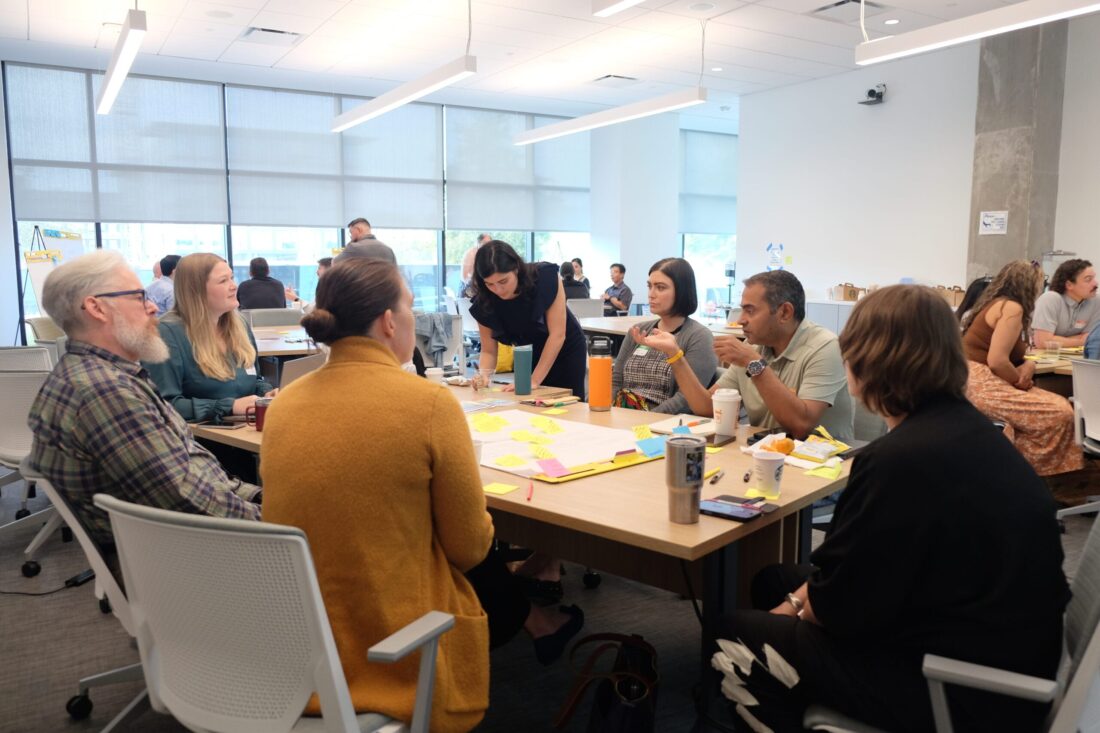
The steps listed below represent a high-level summary of the guidebook’s recommendations for building operational climate resilience. To be accessible to members of all departments across a City, the guidebook is best suited for simpler strategic or operational challenges.
For more complex or technical operations (e.g., the operational management of a utility or network of various robust assets), a more robust process is recommended. The steps in this guide could be used to improve the resilience across components of a more technical operation.
Step 1 – Getting started
1. Determine the operation you want to improve. This could include:
- planning/coordination efforts
- service delivery operations
- infrastructure management.
These prompts are most helpful for low- to medium-complexity operations. Other things to consider are: if you currently have the greatest influence over the problem, if you have meaningful information about the problem, if your leadership is committed to improving the operation, and if you have the budget, resources and/or staff time to make improvements.
2. Identify who will build resilience into the operation – it’s difficult to manage change without assigning clear ownership. We recommend appointing 3 roles, at minimum, to facilitate resilience-building for the chosen operation:
- a person to coordinate stakeholders
- a person to facilitate conversation and exercises
- a person to document discussions and processes.
3. Much of this process is rooted in systems thinking and futuring principles. It may help for colleagues leading or advising on operational improvements to get familiar with basic principles within these disciplines. Below we share some framing for why systems thinking and futures thinking can benefit resilience processes:
- Systems mapping frame: It can be difficult to prepare for “surprise” ripple effects that originate far from your operation. By taking time to map the full picture of your operation and the resources, relationships and risks that can impact it, you can proactively develop partnerships, plans/policies, and investments to improve the security of your operation long-term.
- Futures thinking frame: We often look at the future and see 1-2 options for what’s possible. But the possibilities of the future are endless! Rather than waiting to react to the 1-2 future pathways you foresee, look to enhance your own agency by envisioning myriad possibilities and preparing for the risks or opportunities.
Step 2 – Identifying operational risks
The goal of this step is to identify how one’s operation of choice intersects with other City departments or divisions and to outline the climate risks it faces.
- Explore your operation’s context: Who or what impacts your current operations – or gets impacted by your operation’s successes or failures?
- Simulate your operation by presenting some hypothetical ‘worst case scenarios.’ How would your operational team respond to that threat today? What weaknesses might this reveal?
- Build out a list of operational threats (like extreme heat, drought, flooding, wildfires, etc.).
- What magnitude of each threat would cause strain or shock to your operation?
- How would your operation experience that threat?
- What would happen if more than one threat were to occur simultaneously?
Use this to determine the conditions / time frame for which you need to build resilience.
- Identify stakeholders or staff who could shed new light onto your operation’s process and risks.
- Ask them about their perspective to fill knowledge gaps (don’t forget to document)!
- Use this to improve your understanding of how your operation impacts other local government functions, and potential risks.
Step 3 – Estimating the cost of business as usual
The goal of this step is to frame current operational vulnerabilities and weaknesses as future costs. This can help make a compelling case for investing in resilience measures.
- Consider your existing operational costs. What would happen to these costs in the “threat” conditions previously identified?
- Consider new costs. What types of costs might you expect in those conditions that you do not experience now? (Examples: staff injury/illness, infrastructure replacement, service disruptions, emergency supplies, etc.)
- Identify data sources that can help you estimate your projected costs. This will likely include data from outside your immediate division, as well as a mix of historical data and future projections.
Step 4 – Designing a “future-ready” strategy
The goal of this step is to explore how climate change and other future scenarios might impact an operation, and develop a strategy that can adapt to multiple possible futures.
- Identify political, economic, social, technological, environmental, and legal factors/trends (e.g., the PESTEL framework) that could impact your future operations. Prioritize the risks that are most important for you to mitigate, based on their likelihood or consequences.
- Develop ideas that could mitigate your highest priority risks. You can use ideation techniques to brainstorm, and consider protocols, criteria or goals that might impact operations.
- Simulate your operation by presenting some hypothetical ‘worst case scenarios.’ How would your operational team respond to that threat today? What weaknesses might this reveal?
- Consider how your ideas might form a robust, multi-activity strategy.
- How would different ideas build on each other to best address your greatest risks?
- If your current assumptions about the future are incorrect, what contingencies could you build into your strategy?
Articulate a plan, with different activities and milestones, that builds resilience across a range of future pathways.
Step 5 – Planning how and when to implement change
The goal of this step is to define how the new operational strategy will be sustained and adapted over time to improve successful implementation.
- Define the conditions or risk levels that prompt your strategic response. You may want to consider this for the strategy as a whole, or for different activities. For example:
- Do you need to begin certain activities several months ahead of a high-risk season?
- Do certain activities get deployed at a specific level of degradation or strain on your operation?
- Plan how your new strategy can get launched. Consider questions like:
- What would success look like?
- What would failure look like?
- Who and how often is your strategy monitored, and if the strategy isn’t working, who’s responsible for changing it?
- Whose buy-in do you need? Who will manage and staff the new approach?
- Which resources will you need to deploy the new operation?
- Articulate why your operation needed to change, and how the changes approach addresses key risk. Determine how this message will get communicated to different external and internal audiences (e.g., adjusting for topic literacy, influence level, stakeholder concerns, and trusted messengers).
Build More Climate-Informed, Future-Ready operations
Download the full guidebook to explore practical approaches for building resilience in your own context.
Acknowledgments
This work was stewarded by Austin Budget and Organizational Excellence (ABOE) and Austin Climate Action and Resilience (ACAR), with contributions from: Austin Energy (AE), Austin Parks & Recreation (AP&R), Austin Resource Recovery (ARR), Austin Transportation & Public Works (ATPW), Austin Water (AW), and Austin Watershed Protection (AWP).
The Centre for Public Impact is grateful for the financial support of the Central Texas Climate Action Fund, and intellectual collaborations with Open Government Partnership, University of Texas at Austin, the OECD, The Urban Systems Lab, and the Institute for the Future that enriched this process.